

How to choose the right radiator for your home
Okay, so I know that radiators aren’t the most interesting topic, but they can make a huge difference to the look of your home.
You might be familiar with the classic boxy radiators that take up half a room, aren’t the nicest to look at and are dust traps. But these days, you shouldn’t feel like you have to buy one of those. There are LOADS of other options available that look sleek and modern (or even old-fashioned, if you have a Victorian home and you want modern cast iron radiators, for example).
Choosing the right radiator isn’t difficult when you know what your natural home style is. It also helps to know where you’re going to put it so you can take dimensions. This is really important, as it helps to know how much space you’re willing to give up in the room. You also need to think, Is the radiator going to be on display or not? If no one is ever going to see it, then you might not need to worry so much about what it looks like.
With so many options available, it can be difficult to choose the right radiator for you. So here’s how you narrow the search down to what you want.
The room
Before buying a radiator, you need to consider which room it will be going in and where it will be going. Space in our homes is priceless, and so you need to think about how much space it will take up in the room, and whether any furniture could block it.
For a kitchen, a vertical radiator might make the most sense. Wall space is needed for kitchen cabinets and appliances, so you don’t want a long radiator that’s going to take up too much. Instead, a vertical radiator utilises space higher up in the room. It’s a lot narrower than standard radiators and so will heat a room efficiently without taking up too much room.
You might also want to consider that kitchens can get very hot when cooking, and so a smaller, narrower radiator might be better for the space anyway.
In a bathroom, space again can be hard to come by. As with a kitchen, a tall and narrow radiator might be the best choice. These give you enough space to hang your towels, but they also keep the room really cosy, which is what you want as bathrooms can feel quite cold at the best of times.
In a bedroom, it’s usually best that the radiator goes under the window. This means that, unlike the kitchen and bathroom which might have very tall radiators, you’d be looking for a longer, shorter one. Radiators tend to go underneath windows as this encourages maximum air circulation. The hot air goes up and the cold air coming through the window (even through closed windows) helps to push the hot air into the room.
This is also likely to be the case for living rooms, but in a living room, you should consider where your furniture will be going. When a sofa or cabinet is placed in front of a radiator, you’re blocking and therefore losing around 20% of the heat a radiator produces. This is a waste of energy, and so when considering where a radiator will go, you should also think about furniture placement in advance.
Heat output
Heat output is really important when it comes to choosing a radiator. If a radiator is giving out too much heat, you could be using too much energy, which is both bad for the planet and for your wallet. But if a radiator is giving out too little heat, a room can feel cold or have cold spots where it’s not being heating efficiently.
The heat output of a radiator is measured in British Thermal Units (BTU). You can work this out yourself, but it’s better to use one of the many BTU calculators that’s already out there. I’ve linked to B&Q’s one, which simply asks for the room you want to heat, the dimensions of the room, and how many windows or doors it has. This will provide you with a BTU rating.
When you’re shopping for radiators, you can find the perfectly sized one for your room and know that it will deliver just the right amount of heat.
The style
Once you start shopping for your radiator, you’ll see how many styles there are, and they all have various pros and cons, so it’s important that you do your research and see which style will be best for you.
Central heating radiators
The classic central heating radiator has one of the best heat outputs, which means its performance is almost unrivalled. These are your typical white radiators that are usually a square or rectangle shape, and tend to go underneath your windows. The panels are corrugated so that the heat can be efficiently pushed into the room.

As you can see, these are great for feline friends too, who love to spread out on top of the radiator!
Column radiators
The next style to consider is the column radiator. These have a similar look to the cast-iron radiators of the Victorian era, but are designed in a more modern way, like the one in the image below.
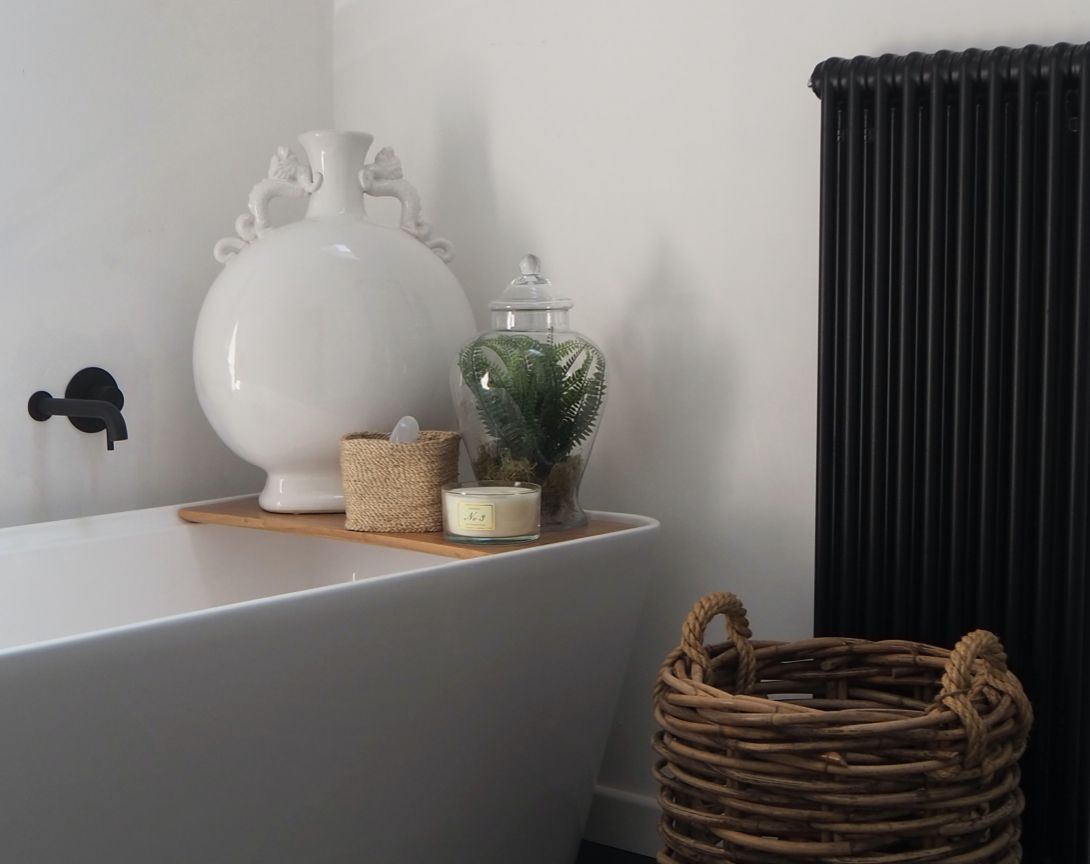
These can come as standard height, like the shape of the central heating radiator above, but they’re also very popular as tall, vertical radiators (as in the image below of me, my mum and my sister)

Towel radiators
Towel radiators, as the name suggests, are better suited for a bathroom. However, when purchasing a towel radiator or towel rail, you should be careful that you buy the right size to heat the room and not just your towels. In some cases, it may be more beneficial to have both a radiator and a heated towel rail, so you can ensure that your bathroom stays really toasty (there’s nothing worse than a cold bathroom).
Cast iron radiators
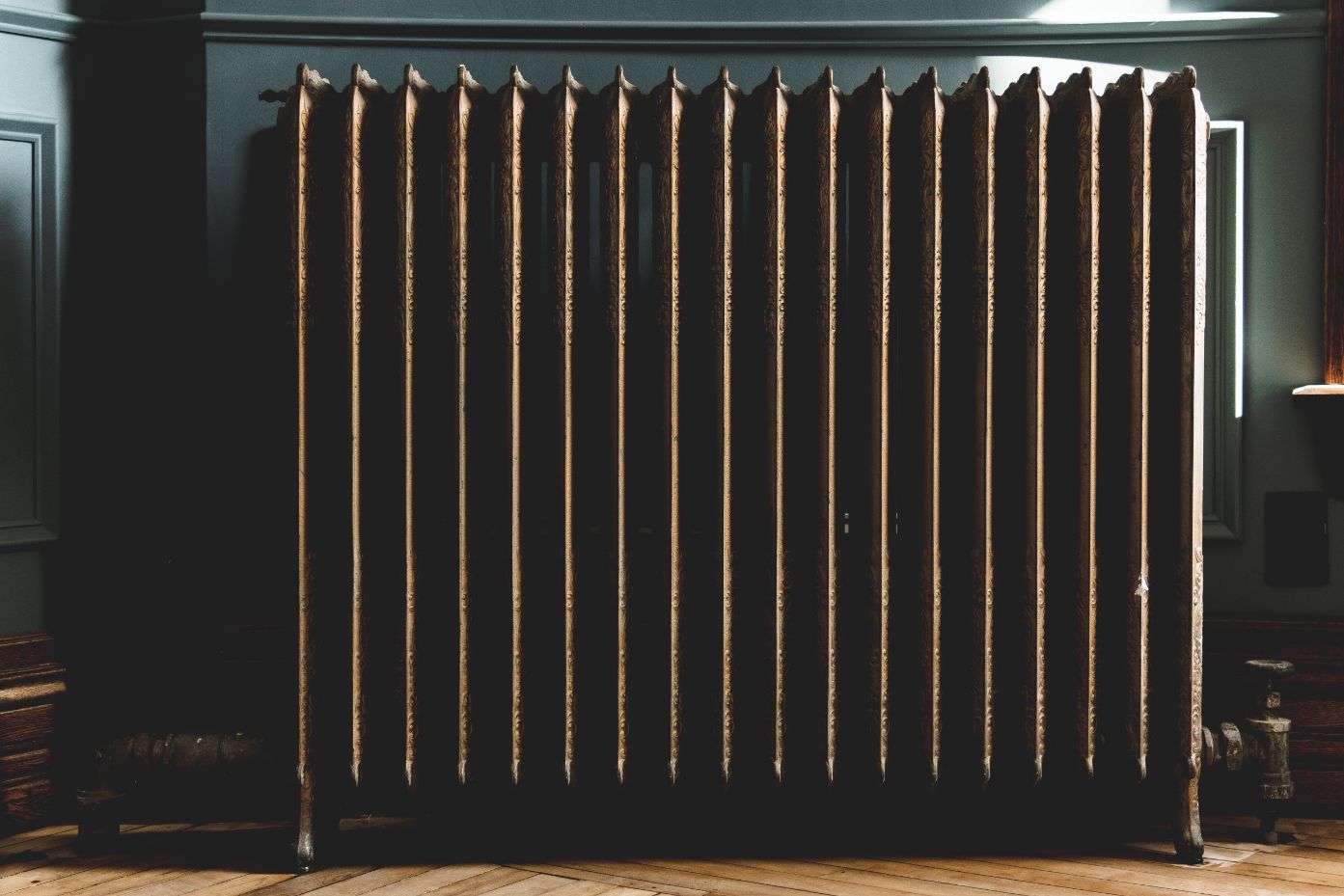
I’ve already mentioned these a couple of times in this article, but cast iron radiators can be really beautiful and fit perfectly into a period home. Because of the material they’re made from, they take longer to heat up but they also take longer to cool down, so they will continue to emit heat for longer even after your boiler has turned off.
Flat panel radiators
Flat panel radiators come under the same category as central heating radiators, but they have a completely flat surface instead of the grooves that are typical in a radiator. This means they are ultra slim, making them perfect for small or narrow rooms and have a high heat output.
The material
I’ve covered a LOT of information here already, from the room, to the heat output and the style. The final consideration to make is the material. You’d be surprised at how many materials are available, from iron and steel to stainless and aluminium. The material can have an impact on how efficient the radiator is.
Modern cast iron radiators (i.e. not original ones) are much more efficient than they used to be. They suit a period property down to the ground, but when combined with modern insulation, they can be just as efficient as other materials. They are very heavy and so installation could cost a little more, but it’s worth it.
Steel, or mild steel, radiators are super modern but also relatively cheap. It’s easy to mould steel and so these radiators can come in all sorts of amazing shapes. The only thing to consider is that they can be prone to rust and so some kind of inhibitor may have to be added to your central heating system to prevent this.
Next up is stainless steel. These not only conduct heat really well, but they’re easy to look after and won’t rust, unlike mild steel. They’re slightly more expensive, but not as pricey as a cast iron radiator. They can also show drip marks, so expect to wipe them down to clean them.
Then finally, we have aluminium radiators. These are arguable the best kind because their heat output is unbeatable. They heat up really quickly and can spread the heat further too. These can be very expensive, but as they’re so efficient, you may see them as a good investment.
The material you use will depend on the room you plan to use it in and whether it will be on display.
I hope this guide has helped for those choosing radiators in their homes. There really is so many to choose from it can be a bit baffling!
What kinds of radiators do you have in your home (or wished you had)?




Thank you for sharing nice post
Good article. Thank you for the post