

7 features every ergonomic desk should have
*This article contains affiliate links, which means I may earn a small commission when you purchase a product after clicking through the link.
When you work at a computer or laptop all day like me, then you know the aches and pains that can come as a result. Without the proper equipment, you could suffer with back pain, repetitive strain injuries, carpal tunnel and so much more.
Ergonomic desks are key to reducing strain, improving posture, and helping you stay productive – whether you’re working from home or in a shared office space. One of the most popular and practical options is a height adjustable desk*, which can completely transform your workday by letting you switch between sitting and standing, ultimately supporting better long-term health.
Below, you can find a breakdown of all the essential features of an ergonomic desk that should help you choose which to go for in terms of comfort and support.
1. An adjustable height range
One of the most important features in an ergonomic desk is adjustability. A proper height range allows users of all sizes to alternate between sitting and standing positions. Ideally, the desk should be adjustable from around 65cm to 125cm, covering most needs, whether you use a kneeling chair, an office chair or you prefer to stand. For shared workspaces, programmable memory presets are a significant plus.
What is the ideal height for a desk?
- Sitting position: 65 to 75cm
- Standing position: 95 to 125cm
- Memory presets: Optional but helpful
This flexibility helps reduce strain on the neck, shoulders, and back by promoting better posture throughout the day. Whether you’re working solo or sharing the desk with others, the right height range ensures consistent comfort and support.
2. A strong, stable frame
Stability is essential, particularly as your desk will need to hold at least one laptop or computer, if not an additional screen, and sometimes extra devices like printers. A well-designed desk should remain level and steady, even at its highest position. Look for desks made from reinforced, powder-coated steel, known for its stability and long-term durability, and prioritise models with reinforced legs or wide footings to support heavier tech setups.

3. Quiet adjustment settings
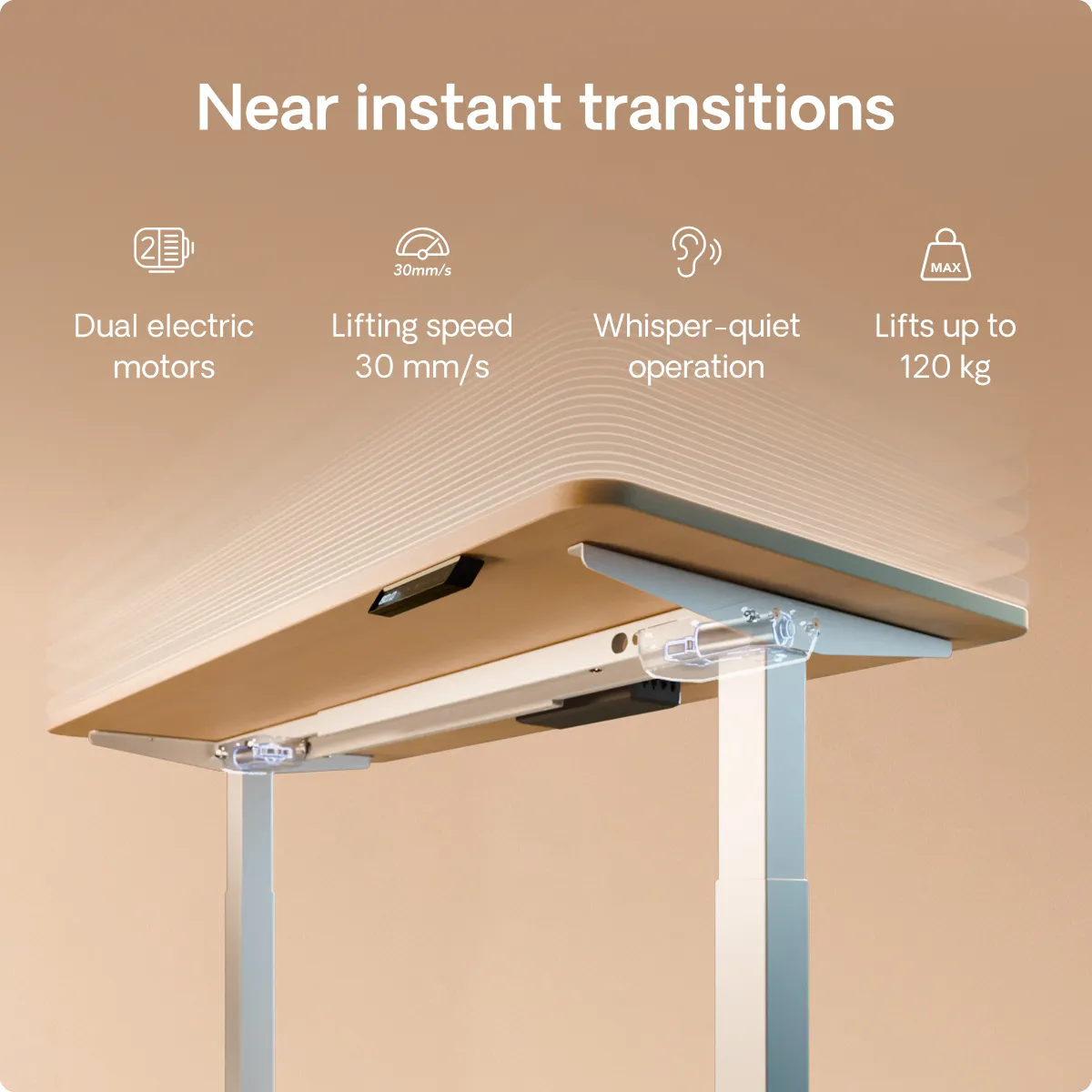
In shared offices or home settings, noise matters. A high-quality motorised desk should operate at under 50 decibels, enabling smooth, silent height changes. Dual motors often provide better performance and quieter operation than single-motor alternatives.
4. Plenty of surface space
The work surface should accommodate your essentials without feeling cramped. Look for desks with a depth of at least 60–70 cm, and width depending on your tech setup.
| Workspace Type | Recommended Width | Ideal Depth |
|---|---|---|
| Single Monitor Use | 100 to 120cm | 60 to 70cm |
| Dual Monitor Use | 140 to 160cm | 70 to 80cm |
Scratch-resistant coatings, rounded corners, and cut-outs for cables add further value.

5. Built-in cable solutions
Cable clutter isn’t just unsightly – it can be a safety risk and hinder height adjustment. A good ergonomic desk should include or support cable trays, grommets, or under-desk organisers to keep wires out of the way.
6. Additional safety features
Programmable controls make it easy to maintain healthy habits. At the press of a button, you can return to your preferred sitting or standing height. Advanced models may also include:
- Anti-collision detection
- Child lock functions
- Touchscreen controls or digital panels
These extras enhance both safety and usability.
7. Seamless integration with add-ons
A future-proof ergonomic desk should be compatible with add-ons such as:
- Monitor arms for proper screen alignment
- Keyboard trays for wrist comfort
- Standing mats to reduce leg fatigue
Check for universal fittings or optional mounting points to make your workspace even more adaptable.
An overview of the features of an ergonomic desk
An ergonomic desk isn’t just a fancy bit of furniture. It’s the base of your whole working day. Get the right one, and you’ll be comfier, more productive, and far less achey by 5pm.
So, what should you be looking for? First up, make sure it’s got a decent height range so you can switch between sitting and standing without turning it into a wrestling match. A solid, wobble-free frame is a must (especially if you’ve got loads of kit on it), and a quiet motor will keep things peaceful if you’re working near others, or you just hate annoying whirring sounds.
You’ll also want a big enough surface for your screens, notebooks and snacks, and some proper cable management so you’re not fighting with wires every time you move it up or down. Bonus points if it comes with memory settings, safety features, and plays nicely with extras like monitor arms or keyboard trays.
In short, a good ergonomic desk should fit around the way you work – not the other way round. Whether you’re kitting out your home office or sorting out a shared space, picking a desk with these features will make your life loads easier (and your back will thank you later).


