

Testing Lick’s exterior paint in White 04 [Review]
Ad - The products in this post were gifted in return for an honest review.
Can you believe it’s now been a whole year since we moved into our ‘new’ home. I keep calling it new, but it isn’t really anymore. We feel fully settled here and what a year it’s been.
I don’t think either of us appreciated how much we’ve got done until we really thought about it recently. In 12 months, we’ve:
- Completed a cheap fireplace makeover
- Redecorated our master bedroom
- Painted a uPVC front door and metal garage
- Redecorated our lounge
- Overhauled the home office by painting the MDF bookcases
- Uncovered some of our very overgrown garden.
Phew, that is a lot.
But the garden is far from finished. In fact, the work we did on it in April was just the start. When we moved in, it had been left to become a big of a jungle, full of enormous shrubs and plants that were becoming very woody.

We cleared so much of it, with the help of HIPPOBAG*, so it looked a little more like this:
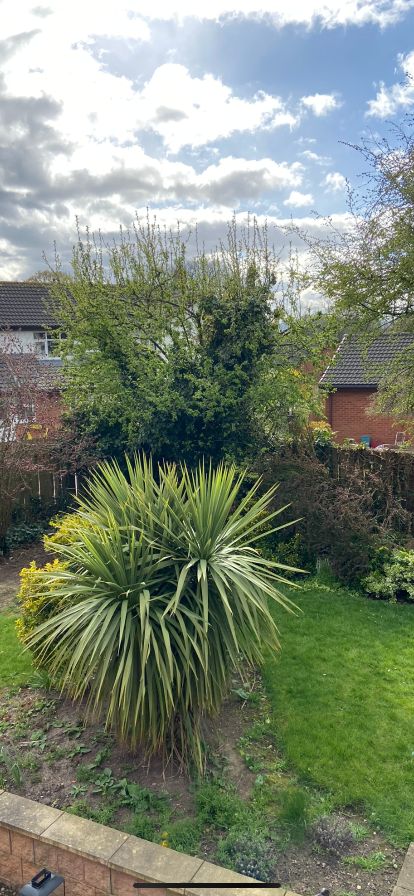
But we’ve continued to overhaul it further and we decided that we wanted to paint the small retaining wall. Lick got in touch and offered their external paint for me to try, so I jumped at the chance.
Lick’s exterior paint

The wall I wanted to paint is as old as our house (1980s) and, even with a good jet wash, just wasn’t looking as clean and tidy as we’d liked.
After deliberating on what colour to paint the wall, we chose a classic white. Lick offer 13 colours in their exterior paint, and I went with White 04. This is a soft linen white that has grey undertones, exactly what I wanted as I didn’t want a bright wall that would blind us in the sun.
After doing some research, I decided to heavily water down the first coat. When painting stone, it’s normal for the stone to absorb a lot of the paint, so for the first coat, I used 50% water, 50% paint. This did make the mixture very runny but it was so easy to apply and I was actually amazed at the coverage, considering how much extra water I’d put in.

See what I mean about the coverage? The original wall colour was showing through in some places, but I was really impressed as I’d hardly used any paint out of the tin.
For the second coat, I did water it down a tiny bit, but no where near as much as I had the first coat. I did find the paint was quite thick, which is great for other surfaces but difficult to work with when painting such a rough stone.
I applied the second coat the next day, to really give the first coat time to dry. I also removed all the weird mud/pebbles from around the edge of the patio at the bottom of the wall and replaced it with brand new slate.
Overall, I’ve been really impressed with the paint. I wasn’t sure how far a 2.5l tub would get me, but actually I did two coats of the wall and have half a tin left over!
It was easy to apply and seems to have dried really nicely as well. My one and only gripe is that the colour isn’t quite what I expected. I still love it, but the colour on the website does look different, so I’d urge that you get a sample where possible.
Lick’s exterior paint has helped us go from this:

…to this!


The next step is to paint the top (not white, because the cat’s are always walking along the wall) and dig out the weird T-shaped pebble bit you can see in one of the photos above. We’ll replace it with the same slabs we currently have down.
Lick’s exterior paint isn’t just for masonry/stone, but also wood, brick, MDF, metal, plastic, UPVC, concrete and ceramic tiles. They don’t recommend that it’s used on a flat surface where water can pool, which is why we’ll be using a more weather-friendly paint for the coping stones on top of the wall.
So far, the paint has held really well and I would certainly be using it again for any further outdoor projects. You can see their full range of exterior paints and colours here.


Was wondering if you had an update on how this ages/weathered? 🙂
It’s actually weathered really well, the only thing is the green mossy stuff has slowly climbed up it, but I think this would only take a bit of jetwashing to get it off. The paint itself hasn’t shifted!