How to make your garden safer for your children
This has been quite a big problem for us recently. As parents of a 1 and 3 year old, we’re constantly making sure they aren’t hurting themselves and falling off things, and our garden isn’t really the safest space for them.
I always love the thought of using our garden more, especially in the summer. Morning coffees in the sun, wet footprints across the patio from the kids being in and out of the paddling pool.
But as I currently have two toddlers, I stop seeing the practical uses for the garden and start to see a series of potential A&E visits. So this got me thinking about ways we (and everybody else) can actually make a garden safer, whether you have children of your own or your grandchildren come to visit every now and then.
Start with your fencing and boundaries
Toddlers are tiny escape artists. Even when you think something is safe, they find the one dangerous aspect and test their limits. They’ll test every gap, push against every panel, and somehow spot weaknesses you didn’t even know were there.
So first, I’d suggest you do a good walk around your garden and look at it from their height. Are there gaps underneath panels? Any wobbly posts? Latches that don’t quite catch?
We recently rebuilt the gates either side of our house because we realised how accessible the garden actually was. It only took one “imagine if…” moment for us to act, as our gates had a latch but no lock, so anyone could have just walked around to the back garden. We’ve now installed coded locks on both gates so the garden is completely inaccessible unless we open it.
If you’re upgrading fencing or replacing tired panels, make sure to source your fencing products from a reputable supplier. They will guarantee the fence panels are in top condition and strong enough to fight against anything nature (or your children) throws at them.
And don’t forget internal hazards, like retaining walls, ponds, steep drops or raised beds with sharp edging. Our retaining wall has loose tiles running along the top, and of course my daughter loves to walk along the top, back and forth constantly. Fixing these down with new mortar is top of our priority list before the summer.

Identify and remove toxic plants
It’s not something we think about as adults, but that’s because we don’t go around eating plants. But for our children, they can do odd things we might not have considered.
So many traditional, cottage-garden favourites are actually toxic. When you’ve got little ones who explore by grabbing, squashing and occasionally tasting, it suddenly matters a lot more.
Plants that can be poisonous to children include:
- Azaleas
- Foxglove
- Hydrangea
- Lily-of-the-valley
- Mountain laurel
- Potato sprouts
- Unripe tomatoes
- Laburnum.
We have a big laburnum tree in our garden. When it flowers, it’s absolutely stunning, with gorgeous yellow flowers in May. But every part of this plant is toxic, and I don’t want to take any risks with a 1 and 3 year old.
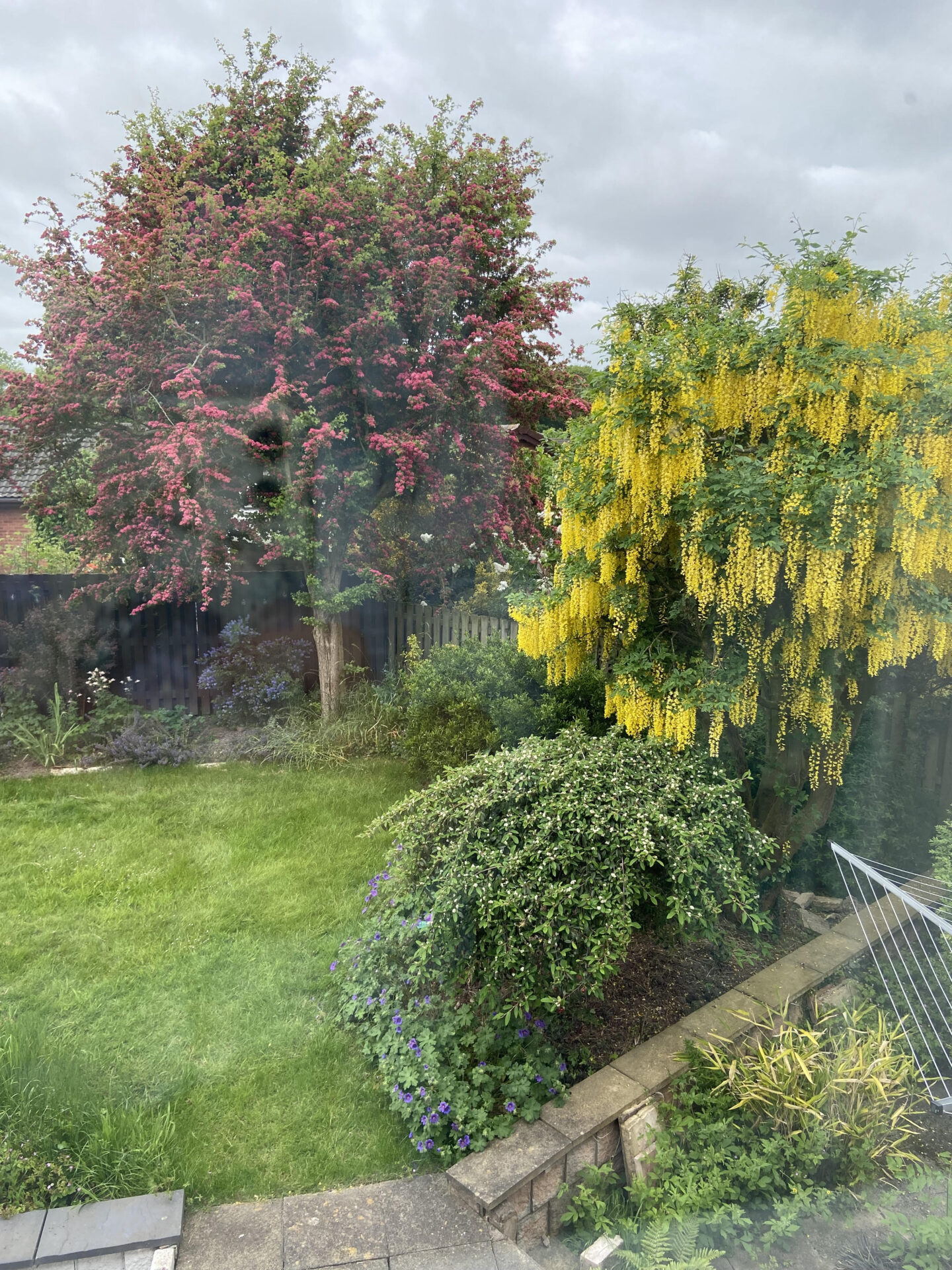
We’ve made the decision to take it down this year. It’s genuinely sad from an aesthetic point of view, but I think it would havehad to come down anyway to make way for our new extension.
If you’re unsure about what you’ve got growing, the RHS has a really comprehensive list of plants that are harmful to children and pets. There are plenty of safe, cheerful alternatives like sunflowers, marigolds and lavender that still give you colour without the worry.
Check furniture, play equipment and “climbables”
Anything that can be climbed will be climbed. That’s just a fact of life with toddlers, especially my youngest who has just learned he can get on the sofa on his own (and then falls off about a minute later).
Trampolines, climbing frames, benches and even stacked plant pots can become mini assault courses so consider how you can perhaps block access or place them where you can see them from inside (e.g. put the climbing frame in view of the kitchen window so you can keep an eye).
In the spring, take the time to check for rust, loose bolts, splintering wood and sharp edges. Everything should be age appropriate, especially if you’ve inherited equipment from families with older children.
We’ve realised that before we host any proper garden parties (which we’re desperate to do this year, especially birthday parties for the kids), we need to deal with the “climbable chaos” first. I don’t want to spend the whole afternoon hovering instead of actually enjoying it.
Lock away any dangerous items
There’s actually lots of dangerous items that come with gardening, from sharp tools and powerful machines to strong chemicals.
You should store all pesticides, fertilisers, and antifreeze in their original, labeled containers within a locked shed, garage or secure cabinet, and never leave electrical equipment plugged in when not in use.
When you’re done gardening, tidy away properly instead of leaving spades and racks lying around. Make sure you remove any garden waste too.
If you have a water feature, like a pond, kids will be drawn to this, so cover it with mesh or another similar material so they can’t fall in properly.
Think about surfaces and falls
Toddlers are wobbly beings. My 1 year old is only just finding his legs and it’s like watching Bambi on an ice rink.
Indoors, this isn’t as much of a problem, as the carpet breaks his fall and he’s onto the next thing, but patios and concrete paths aren’t quite as forgiving.
In play-heavy areas, consider softer ground cover like rubber mulch, bark chippings, or even artificial grass. Keep paths level, clear moss from damp shaded corners, and re-lay any loose slabs before they become a trip hazard.
You can’t stop your children from falling, but you can try to prevent the injuries that might occur as a result!
Create a garden you can actually relax in
We’d love to host more outdoor gatherings, like parties in the garden, family barbeques, kids’ playdates. But we’ve been holding off until we can fix our retaining wall, removed the laburnum, and finished strengthening the boundaries.
It will be such a relief when the space is secure, as we can stop scanning for danger every five seconds. I can’t wait for the days when I can sit in a deck chair with a book in the sun while the kids play around me and I don’t have to constantly watch them.