7 ways to light your home
Lighting is especially important in our homes, but is an often-overlooked feature. But the right (or wrong) lighting can totally transform your home and provide you with a whole host of different environments, atmospheres and ambiances.
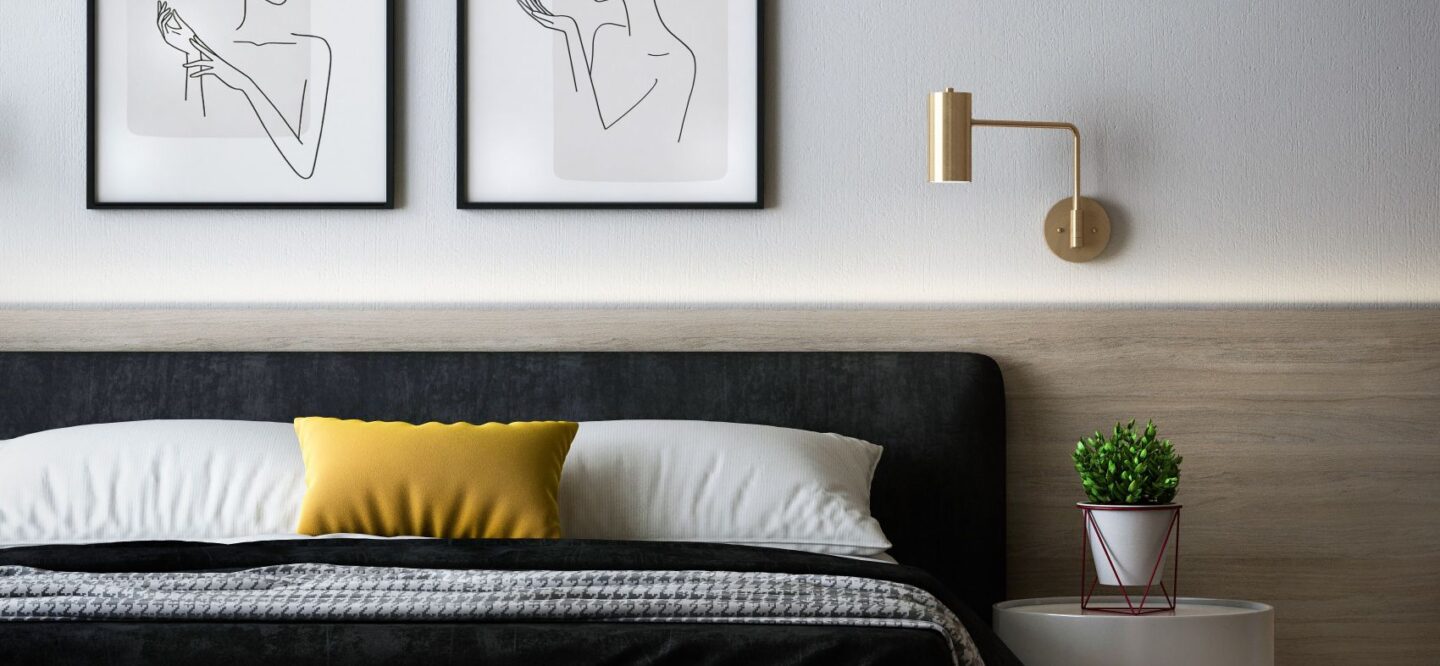
Bright lights are there to make us feel awake and alert, and can be good for when we’re working or cooking. Dim lights are better for creating a relaxing and cosy environment, while we’re eating dinner or reading a book, for example.
Some lights don’t even need to be there for the purpose of providing illumination but simply make a statement.
Fortunately, when it comes to choosing the right lighting for your home, you don’t need special training or to be a professional. Instead, you can follow our 7 ideas below to light your home properly.
1. Plan your lighting
If you’re changing up all the lighting in one room, or starting from scratch (during a home reno, for example), it can be a good idea to make a solid plan.
First, you should think about the lighting needs for each room. Not every room requires bright lights, such as bedrooms or living spaces, whereas others do, like the kitchen and bathroom.
You may also wish to think about the features of the room you want to highlight or block out. For instance, you might not want to draw even more attention to your very large television with an uplight right behind it. Instead, you may wish to use light to focus on another area of the room to draw the eye away from the television.
For period properties, you may want to highlight period features or unusual architectural elements.
During this first step, have a think about the type or size of light you need.
2. Choose the right fittings
Once you’ve established a plan of action and you know the general type and size of lighting you want, you need to think about the type of fittings for each room.
For example, when designing a walk-in wet room, you’ll need to use GU10 waterproof LEDs that are made specially for damp areas, like bathrooms.
In other rooms, you don’t need to think about this, but you should still consider how bright the bulb should be, the colour of the bulb (cool white, warm white, etc.), and the statement you’re trying to make with the scale or colours of the light.
Are the fittings enough to hold the weight of the pendants, as in the image below?

3. Efficiency of lighting
Efficiency is on everyone’s minds at the moment, and you could consider this when choosing how to light your home.
To save costs and add market value to your home, you should consider using something more efficient, like LEDs. LEDs use 90% less electricity and last much longer than filament bulbs. In recent years, technology has improved so that they offer as much brightness as a standard bulb, so you won’t really notice the difference (except maybe in your energy bills!).
If you want to introduce a mix of LEDs and incandescent lights, you could use LEDs in the lights that you use most frequently.
4. Atmospheric lighting
Atmospheric lighting is my favourite kind. We have three lamps in our living room that are used daily, rather than ‘the big light’ which is harsh and blinds me slightly.
Warm tones are super atmospheric and cosy, especially when paired with a dimmer switch so you can choose how bright or dark the room is.
When using LEDs, bulbs between 1,000k and 4,000k will provide a softer lighting source that is perfect for a romantic or cosy setting. Anything above that and the white tone might be too harsh.
I love the simplicity of this floor lamp that would provide a dim light for reading under.

5. Functional lighting
Let’s face it – electric lighting was introduced because we need it, especially when it gets dark at 4pm. So sometimes, as much as we want our light to be pretty and atmospheric, we just need it to be functional.
A white tone has its uses for this. Unlike atmospheric lighting, which needs to sit between 1,000k and 4,000k, you can install white, functional lighting between 5,000 and 10,000k. This brightness is excellent for areas that require adequate light to perform a task, such as a kitchen, a bathroom or even a craft room (hooking a needle and thread isn’t easy in the wrong light).
6. Technological lighting
Modern technology is amazing for creating adequate lighting in any room, particularly when you can make all the lighting in your home ‘smart’.
Smart assistants like Alexa can connect to smart bulbs, which you can control from your phone, even when you’re not at home.
Such smart lighting apps allow you to dim the lights, change their colours and even create profiles. For example, a grooming profile in your bathroom will set maximum white light, while a bathing profile could dim the lights to a warmer tone.
7. Understand layering
You can create the desired ambience by using multiple light sources in a room. In fact, this is highly recommended.
Layering means you can have multiple lights in one space instead of using a bright, overhead light for everything. Robert Gross, architect at Lee H. Skolnick Architecture & Design, says,
Homeowners tend to light rooms like they’re hosting a convention — too much overhead light. This doesn’t add any warmth or character to a room.
Overhead lighting can sometimes be useful, such as in a kitchen, but even then, there are ways of lighting up certain areas differently. For instance, you could install under-cabinet lights that can illuminate your work surfaces while you’re cooking.
Generally, though, you should have a ceiling fixture, which can be accented by smaller fixtures, like corner lamps, where the leading light doesn’t reach.
Take into account that uplighting makes a room feel larger, while low-hanging fixtures create a cosy atmosphere.
So there you have it, my 7 ways to light your home! I hope you can use this guide when planning the lighting in your home.