Do you need a carpenter or a joiner?
When you’re taking on a home renovation, there are all kinds of tradespeople that you need; painters, plasterers, plumbers, electricians, joiners, carpenters.
But wait, go back to those last two. Aren’t they the same thing? Actually, they’re not, but you’re not the first person to think so.
These two trades often get mixed up, and it’s not surprising when they both work with wood and sometimes do similar jobs.
Some advertise as carpenters. Others as joiners. Plenty call themselves both.
So what’s the actual difference? Does it matter who you hire?
Quality work starts with finding trusted carpenters who understand both trades. This can save you the headache of hiring multiple people.
But first, let’s sort out what each trade actually does.
- What is a carpenter?
- What is a joiner?
- What are the key differences?
- Can you hire a carpenter to do joinery?
- Can you hire a joiner to do carpentry?
- Which one do you need to hire?
- What are some common carpentry services?
- What are some common joinery services?
- How do you make the right choice?
What is a carpenter?
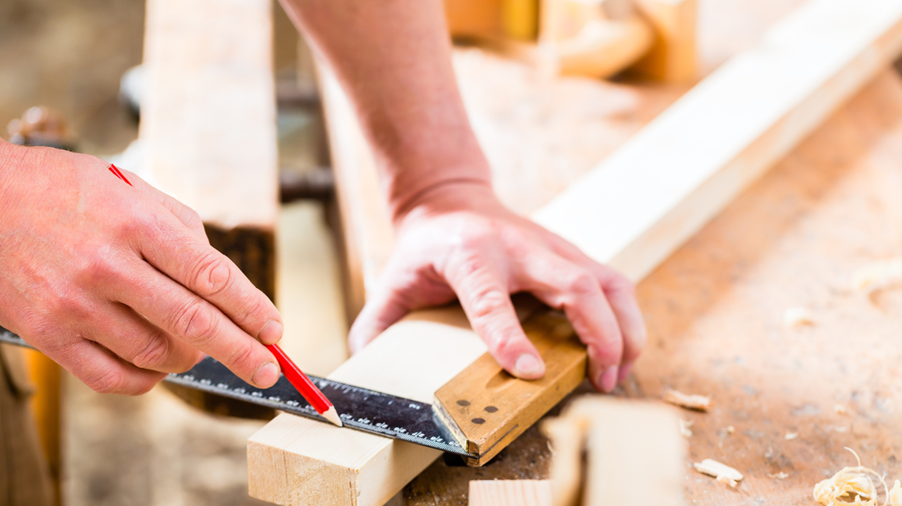
A carpenter works with wood on building sites and in homes, handling the structural elements that hold a building together. They might:
- Put up roof timbers
- Fit doors
- Build staircases.
Essentially, they handle the bigger jobs that shape a property.
Carpenters usually work on site, rather than in a workshop. They measure up, cut materials to size, and fit everything into place, adapting to the quirks of real buildings rather than the neat conditions of a workshop.
Traditionally, carpentry covers both “first fix” work — things like roofing, flooring, and framework that go in before plastering — and “second fix” work, which includes finishing touches such as skirting boards, architraves, and hanging doors.
While most carpenters today use modern power tools and fixings, the core skills remain the same. They need to read plans, work closely with other trades, and think on their feet when a job doesn’t go exactly to plan.
What is a joiner?
A joiner creates wooden items in a workshop before they’re ever installed on site. They make things like windows, doors, staircases, fitted furniture, and cabinets — essentially, the crafted wooden components that carpenters later fit into place.
Joiners specialise in precision joints and fine woodworking, using traditional techniques such as mortise and tenon or dovetail joints. These methods allow pieces to hold together securely without relying too heavily on screws or nails.
Because the work happens in a controlled workshop environment, joiners can take their time to get the measurements spot-on, create perfectly fitting joints, and finish each piece to a high standard before it leaves the workshop.
Quality joinery is built to last. A well-made window or door from a skilled joiner can outlive mass-produced alternatives by decades, often requiring less maintenance along the way.
What are the key differences between carpenters and joiners?
The biggest difference between carpenters and joiners is where they work.
Generally, carpenters work on site while joiners work in workshops. This affects everything about how they approach projects.
Carpenters adapt but joiners work to precise measurements
Carpenters adapt to existing conditions. Walls aren’t always straight, floors aren’t always level, and measurements change when you’re working in real buildings. A carpenter will solve problems with the tools and skills available to them to get things fitted properly despite imperfections.
Joiners, in comparison, work to precise measurements in controlled conditions. They can achieve much finer tolerances and create complex joints that would be impossible on a building site. The work is planned, measured and executed in ideal conditions.
Think of a built-in unit that sits in an alcove. The joiner needs to take precise measurements so they can build the unit off-site and have it installed on-site.
They use different tools
The tools these two tradespeople use can differ too.
Carpenters use portable power tools and hand tools that travel well. These help them to fix things in place. Joiners, however, use workshop machinery like table saws, planers and mortising machines that create more precise results. These things must be kept in their workshop and aren’t really transferrable.

They work to different schedules
The time pressure for these two roles can vary. Carpenters often work to tight site schedules with other trades waiting for them to finish before they can come in. Joiners, however, can usually take the time needed to get details right, without holding up a building project.
Can you hire a carpenter to do joinery?
Many carpenters can do basic joinery, but there’s a difference between can and should. A good carpenter might knock up a simple shelf or basic cabinet, however, if you’re after quality fitted furniture or complex woodwork, you want to hire a joiner with the proper skills and knowledge.
The tools definitely make a difference too. Carpenters have the basics but might not have the workshop machinery needed for fine joinery. Hand-cutting a mortise and tenon joint is possible, but it would be much slower and less precise than using proper equipment though.
Experience matters too. Joinery techniques need practice, and a carpenter who occasionally does joinery won’t have the same skill level as someone who does it daily.
For simple projects, an experienced carpenter might be fine. Anything requiring precision, complex joints, or fine finishing? Get a proper joiner.
Can you hire a joiner to do carpentery?
This works better the other way round. Many joiners do carpentry work, especially the finishing aspect, such as fitting their own products instead of handing them off to someone else.
Joiners understand wood joints and construction techniques and basic carpentry often comes naturally. They might not have all the site tools, but the core skills transfer well.
However, joiners might be slower at rough carpentry work. Their instinct is precision and quality, skills that aren’t always needed for structural work. They might spend time getting perfect joints where a carpenter would use a quicker method that’s perfectly adequate.
For structural work or anything needing speed? Stick with carpenters. For anything requiring precision or quality finishing? Joiners often make excellent carpenters too.
So which one do you need to hire?
When deciding whether you need a carpenter or a joiner, start by thinking about the type of work you need done. Structural jobs, repairs, and quick fixes usually call for a carpenter. If it’s custom furniture, replacement windows, or detailed woodwork, you’ll want a joiner.
It’s also worth considering the level of finish you’re after. If you need something practical and functional, a carpenter is often the right choice. But if you’re looking for something that’s beautifully crafted and built to last for decades, a joiner is the way to go.
Location makes a difference too. Carpenters are used to working in homes, fitting pieces in and around your family life. Joiners, on the other hand, do most of their work in a workshop, which keeps the mess out of your house and gives them greater control over precision and timing.
Finally, think about budget. Joinery tends to cost more because of the time, skill, and workshop overheads involved, while carpentry can be a more economical option for straightforward, functional work.

What are some common carpentry services?
- Door hanging
- Window fitting
- Skirting boards
- Architraves
- Partition walls
- Laminate floor fitting
- Shelving installation
- Roof structures
- Decking and fencing
- Kitchen installation
- Built-in wardrobe installation
- Boxing in pipes
What are some common joinery services?
- Bespoke furniture creation, including fitted wardrobes, bookcases, window seats, etc.
- Replacement doors and windows (especially for period properties)
- Bespoke kitchen and bathroom cabinets
- Staircases (including artistry like turned balusters, curved handrails).
Do all carpenters offer joinery?
No, definitely not. Many carpenters stick to what they know best, which is fitting and fixing on site. They might have basic workshop space but lack the machinery and skills for fine joinery.
Some carpenters do partner with joiners, however, subcontracting the workshop elements while handling the installation themselves. This can work well for customers wanting one point of contact.
The best approach is asking what they’re comfortable with and seeing examples. Don’t push someone beyond their comfort zone just to avoid hiring a second tradesperson!
Do all joiners offer carpentry?
Many do, especially the installation of their own work. A joiner who makes you a kitchen will usually fit it too. Similarly, someone making windows often handles the installation.
However, some joiners prefer staying in their workshops and leave the installation to carpenters. This is particularly common for high-end joinery where the maker wants to focus purely on the craftsmanship.
Joiners who do offer carpentry often excel at the finishing aspects but they might be slower at rough structural work though. Their skills are perfectly suited to precision fitting but less ideal for speed-critical building work.
Again, ask specifically about what services they offer. Many joiners are excellent carpenters too, just don’t assume they’ll want to crawl around lofts or work in muddy conditions.
How can you make the right choice?
The lines between carpentry and joinery definitely blur in practice (I know I’ve been confused in the past). Many skilled woodworkers do both, and the distinction matters less than finding someone competent for your specific project.
Focus on finding someone with experience in exactly what you need doing, being sure to check their previous work and their references. Make sure they’re comfortable with your project’s scope and quality expectations.
Sometimes you’ll need both trades. A kitchen might need a joiner for custom cabinets and a carpenter for installation and finishing. Don’t be afraid to hire specialists rather than compromising on one person who’s adequate at both.
If you’re unsure, get quotes from both types of tradesperson. The difference in approach and pricing often makes the right choice obvious once you see the options.