

How to (properly!) clean your sofa
Okay let’s shove all embarrassment aside. My sofa is where my kids eat their breakfast (it’s a breakfast-only zone, so they make the most of it), drink their milk, accidentally pee themselves, throw up (just the once so far).
It’s a piece of furniture that is properly used for hours a day. It gets sat on, lay on, spilt on, cried on.
With all this daily use comes dirt, dust, spills, and even stubborn stains. And if you’re anything like me, you get scared to clean it, especially with chemicals, for fear of ruining the colour or the fabric.
But THERE IS GOOD NEWS.
With the right approach, tools, and techniques, your sofa can look and smell fresh again. I’m going to share my experience of sofa cleaning over the years to help you make yours look its best again.
1. Know your sofa fabric and how to care for it
Before you pick up your hoover or a cleaning product, it’s crucial that you understand your sofa’s material. Different fabrics respond differently to water, chemicals, and scrubbing.

So first up, what are the most common sofa fabrics?
Common sofa fabrics
- Leather: Durable but sensitive to harsh chemicals. Needs conditioning to prevent cracking.
- Microfibre: Resilient and generally easy to clean. Resists stains but attracts dust.
- Cotton/Linen: Natural fabrics that are breathable but prone to stains.
- Velvet: Luxurious but delicate. Requires careful handling to maintain texture.
- Synthetic Blends (polyester, nylon): Typically stain-resistant and easier to clean than natural fabrics.
My top tip: Check the manufacturer’s care label. Symbols like W, S, WS, and X indicate which cleaning methods are safe:
- W: Water-based cleaners are safe.
- S: Use solvent-based cleaners only.
- WS: Either water or solvent cleaners are safe.
- X: Vacuum only; professional cleaning recommended.
Didn’t know any of this? Well now you do!
2. Get the right cleaning tools for the job
Having the right tools makes the process faster and more effective. Here’s what you’ll need:
- Vacuum cleaner with upholstery attachment
- Soft-bristled brush
- Microfibre cloths or soft rags
- Mild detergent or dish soap
- White vinegar
- Baking soda
- Spray bottle
- Warm water
- Leather cleaner and conditioner (if applicable)
- Optional: Steam cleaner for deep cleaning
3. Start your prep
Before you start scrubbing, some prep work is necessary.
First, I’d suggest you remove the cushions and covers. If the covers are removable, take them off and check the washing instructions. Some might be machine washable an some won’t (I know that ours aren’t and I’ve put them in before now anyway 🙈)
Then, completely move the sofa out. Pull it away from the wall so you can get to all the edges.
Now it’s time to hoover all the loose dirt and debris. Use your hoover’s upholstery attachment to remove dust, pet hair, and crumbs. Don’t forget the crevices between cushions!
In the next step, we’re tackling the stains with some cleaning products. Before doing this, it’s a good idea to test a hidden spot to ensure it’s not going to discolour or damage the fabric.
4. Spot clean any stains
Stains happen, but treating them promptly is the key. Plus, different stains might require different treatments.
Common stains and how to clean them
- Food or drink: Obviously a common one, especially in our house, or if you’re a regular host. As soon as the spillage happens, blot the stain with a damp cloth. For stubbon stains, use a mild detergent or fairy liquid.
- Grease or oil: Sprinkle baking soda or cornstarch on the spot, let it sit for 15 to 20 minutes, then vacuum. Follow with a gentle detergent solution.
- Pet stains: Blot excess liquid, then use a mix of white vinegar and water (1:1) to neutralise odours.
- Ink: Alcohol-based solutions work best, but always test first.
My top tip: Never rub stains aggressively as it can push the stain deeper into the fabric. ALWAYS blot carefully.

My daughter spilt some milk on the sofa this morning (which had then dried on because I took her to nursery and forgot about it), so it was time for a spot clean to get it out.
First I got a damp cloth and pushed it into the stain to draw the milk out. Then, I used some diluted antibacterial spray, sprayed it on and then dabbed it again.
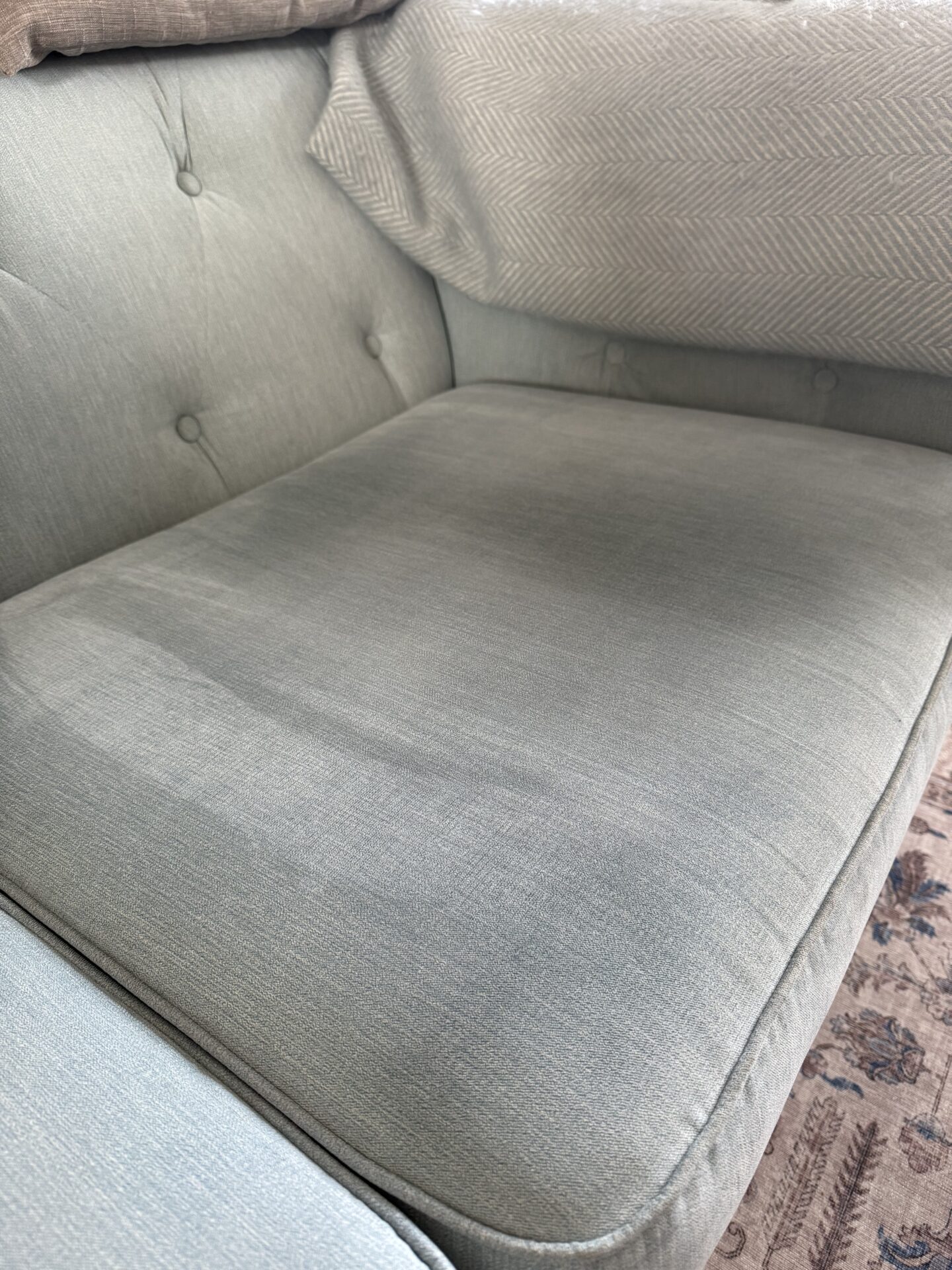
Hopefully, once it’s dried, it’ll be good as new!
5. How to deep clean your sofa
Okay it’s time to pull out the big guns to get cleaning your sofa. I’ve split the section below into fabric sofas and leather sofas, depending on which one you have.
How to deep clean your fabric sofa
- Mix warm water with a small amount of mild detergent
- Dampen a microfibre cloth with the solution (avoid soaking the fabric)
- Wipe the entire sofa gently in sections
- Rinse the cloth frequently to avoid spreading dirt
- After cleaning, wipe the sofa with a cloth dampened in plain water to remove soap residue
- Let it air dry fully before replacing cushions
If you have a carpet cleaner with a hand-held attachment, this is going to make your job much easier. It puts water and detergent onto your sofa and then as you pull back the attachment, it sucks the water back out. It’ll mean your sofa dries much faster than hand washing it.
If you are handwashing it, see the hack on TikTok for using a pan lid and a cloth.
How to deep clean your leather sofa
- Dust or vacuum the surface
- Apply a leather cleaner according to the instructions
- Wipe gently with a soft cloth
- Once dry, use a leather conditioner to maintain suppleness and prevent cracking.
6. Cleaning your sofa cushions
Don’t neglect your sofa cushions! These can trap dirt, sweat, and oils, so they need attention too.
First, take off the covers and wash them accoring to the care label. I’d suggest that you use gentle detergents and avoid washing on a high heat.
For non-removable cushions, you’ll have to do a bit of a spot clean. Use a mild detergent or fabric cleaner and gently work it into the cushion. Avoid completely soaking it as it will take forever to dry and probably start to smell.
After cleaning your cushions, fluff and rotate them to maintain their shape and even wear.
7. Refreshing your sofa
Sometimes your sofa isn’t dirty, it just needs a little pick-me-up (don’t we all).
One of the simplest ways to refresh your sofa is with baking soda. Sprinkle a generous layer over the cushions and fabric surfaces, leave it to sit for 15 to 30 minutes, and then vacuum it up. Baking soda works wonders at absorbing odours, from everyday smells to those lingering pet or cooking scents, leaving your sofa smelling clean and fresh.
For fabric sofas, a steam clean can be a game-changer. Not only does it lift dirt and dust that has sunk deep into the fibres, but it also kills bacteria and dust mites, which can make a noticeable difference if anyone in your household suffers from allergies. Just make sure to check your sofa’s care instructions first, as some fabrics may not be suitable for steam cleaning.
Don’t underestimate the power of fresh air and sunlight either. Occasionally putting cushions outside for a few hours allows the sun to naturally disinfect the fabric and helps remove odours. The fresh air circulation also helps the filling to plump up again, making your cushions feel soft and comfortable. Of course, be mindful of delicate fabrics that might fade in direct sunlight, but for many sofas, a bit of sunshine can do wonders.

8. How to keep your sofa cleaner for longer
A clean sofa stays clean longer with some simple habits. It’s great to implement these when you can, so you don’t have to deep clean your sofa as often.
One of the most effective things you can do is vacuum regularly. A weekly vacuuming session helps prevent dust, pet hair, and crumbs from building up, stopping dirt from settling deep into the fabric where it’s harder to remove. Make sure to get into the crevices between the cushions too, as these are often the spots where the sneaky bits of fluff accumulate. If your hoover is just not hoovering anymore, think about buying a specific pet hoover for all that hair.
Another smart trick is to use throws and washable covers on the areas of your sofa that get the most use. Not only do they add a touch of style, but they also provide a protective layer against spills, pet hair, and everyday grime. These can easily be removed and washed, which keeps the underlying fabric in better condition for longer.
When accidents happen, timing is everything! Treating stains immediately dramatically reduces the chance they’ll set and become stubborn, permanent marks. Keep a small cleaning kit handy with a soft cloth and mild detergent so you’re ready to tackle spills as soon as they happen. Think of it as a little superhero kit for your sofa.
You might also want to consider a “no shoes” rule in your living room. It’s a small lifestyle change that can make a huge difference in how clean your sofa stays. Shoes track in dirt, dust, and all sorts of tiny particles that you might not even notice until they’ve started to dull your fabric.
Finally, rotating your cushions regularly is a simple yet effective way to maintain their shape and ensure even wear. Cushions that always sit in the same spot will naturally become compressed or lose their fluff in specific areas, while rotation helps them wear evenly. Fluffing and turning them also keeps them comfortable and inviting, so your sofa remains the perfect spot to relax or entertain.
9. When to get help (I mean the sofa, not you)
Despite your best efforts, some sofas need professional care. Consider it if:
- Your sofa has stubborn stains that won’t budge
- The fabric is delicate (silk, velvet) and at risk of damage
- The leather is cracked or excessively dirty
- You want a deep, sanitised clean to remove allergens.
So there you have it. How to clean your sofa properly, no matter what material it’s made from. I hope this has been helpful. The milk stain on mine has come out completely, and now my sofa smells wonderful again too.


