
How to choose a sustainable fireplace
If you’ve been thinking about making your home a little greener, your choice of fireplace is a surprisingly big deal.
Traditional wood-burning fires might give off that cosy crackle we all love, but they’re not exactly eco-friendly. Luckily, there are modern alternatives that look just as good (if not better) and are much kinder to the planet, like bioethanol fires.
Incorporating environmentally conscious choices into your home is not just a trend but a necessity for a sustainable future. With the growing emphasis on reducing carbon footprints, choosing the right heating solution can significantly impact your home’s ecological balance.
In this guide, I’ll look at how bioethanol fires stack up against wood-burning and electric fireplaces in terms of cost, maintenance, and sustainability. So, if you’re after warmth, ambience, and a smaller carbon footprint, here’s everything you need to know.
Why go sustainable?
Sustainable living is becoming an essential part of our lives instead of just a ‘fad’.
Every choice we make at home, from our paint to our power, adds up. Heating is one of the biggest culprits when it comes to energy use, so switching to a greener fire can make a real difference.
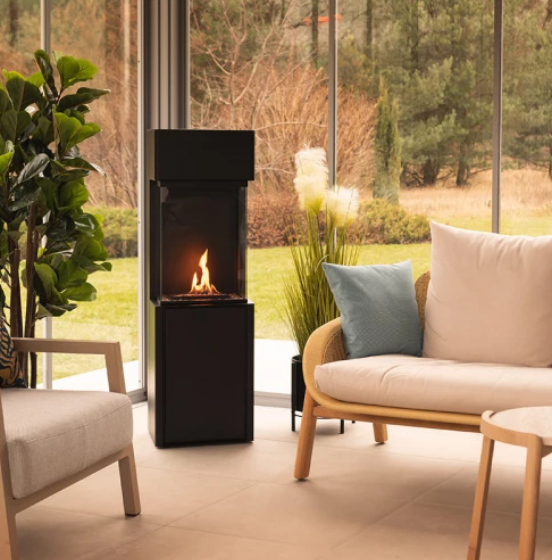
Bioethanol fires, in particular, are having a moment. They look sleek, they’re easy to use, and they don’t come with the same environmental baggage as traditional fires.
What are the advantages of bioethanol fires?
One of the biggest perks of a bioethanol fire is how eco-friendly it is. Instead of burning wood, it uses a renewable fuel made from plant by-products. That means far fewer emissions, no smoke, and no soot clinging to your walls or ceiling.
They’re also incredibly easy to install. No chimney, no flue, no complicated building work, just a stylish focal point you can set up almost anywhere. That makes them perfect if you live in an apartment or a newer build where a traditional fireplace isn’t an option.
Maintenance-wise, bioethanol fires are wonderfully low-effort. You simply fill up the burner with bioethanol fuel, light it, and enjoy the glow. No log chopping, no ash sweeping, no endless dust. Just clean, simple warmth.
And because they come in so many designs, from sleek wall-mounted models to freestanding statement pieces, you can easily find one that suits your home’s style.
The charm (and challenges) of wood-burning fireplaces
It’s hard to beat the smell of burning wood and that hypnotic crackle, but while wood-burning fireplaces evoke a sense of nostalgia and traditional charm, they come with several drawbacks that you should consider before having one installed.
For one, wood-burning fires produce a lot of smoke and particulates, which isn’t great for your health or the environment. The emissions contribute to indoor air pollution and negatively impact air quality, which can be significant, especially if your wood isn’t properly seasoned.

Then there’s the upkeep. You need to clean your chimney regularly to prevent soot and creosote build-up (creosote poses a fire hazard), and you’ll need somewhere to store all that firewood. Wood piles can attract pests if you’re not careful, so you need to find adequate space that won’t make all the insects want to make a cosy home in your firewood.
It’s romantic, sure, but it’s also hard work — and not the greenest choice. As society shifts towards more sustainable practices, the high carbon emissions associated with burning wood highlight the need for cleaner heating solutions. Bioethanol fires offer a way to enjoy similar warmth without compromising on ecological responsibility.
The convenience of electric fireplaces

If convenience is your top priority, an electric fire could be just the ticket. They’re quick to install (literally plug in and go) and don’t need any venting, so you can fit one almost anywhere.
They’re energy-efficient too, especially if you only need to heat one room instead of firing up the whole house, reducing unnecessary energy consumption typical of centralised heating systems.
Many models also come with handy safety features, like automatic shut-off settings, which make them family-friendly.
That said, electric fires depend entirely on mains power. So if electricity costs in your area are high or your energy supply isn’t from renewable sources, they’re not always the most sustainable option in the long run.
Which is best for the planet?
When it comes to eco-friendly heating, understanding the environmental impact of each option is crucial.
Bioethanol fires come out on top, because they use renewable fuel and emit next to no carbon. They’re one of the cleanest ways to get that warm, cosy glow.

Wood-burning fires, on the other hand, release far more greenhouse gases and particulates because they rely on combustion processes involving organic materials like logs or pellets. Not ideal if you’re trying to live more sustainably.
Electric fireplaces sit somewhere in the middle. They don’t produce smoke or soot, but their environmental impact depends on where your electricity comes from. If your home runs on renewable energy, an electric fire could be a very green choice.
If you’re after something stylish, low-maintenance, and kind to the environment, bioethanol fires tick all the boxes. They give you the atmosphere of a real flame without the faff or the guilt.
Of course, it all depends on your priorities, whether it’s ease, cost, or sustainability. But if you want to make your home feel warm in more ways than one, a bioethanol fire is definitely worth considering.


