How to achieve a minimalist look at home
Minamilism is a popular home interiors trend that emphasises simplicity, order and beauty in subtle details, but I do think it’s either a look that you love or hate. It’s certainly not for everyone, but it can be truly beautiful in its simplicity.
It strips away anything that is unnecessary and instead focuses on the bare essentials to create a calm, airy and refined space.
Minimalism also tends to create a feeling of mindfulness in the home. By being surrounded only by the things you truly value, the atmosphere becomes less stressful, making it easier to relax and unwind. This is one of the reasons the style is often linked to wellbeing as well as aesthetics.
In this article, I’ll explore what makes up a minimalist home, as well as some top tips to help you achieve the look in your home.
1. Declutter
I promise I’m not jumping on the Marie Kondo bandwagon, but ultimately, a minimalist home means not having much clutter. You should start by deciding what is important enough to keep, what should go into storage and what can be binned.
Storage is the ultimate tool for creating a minimalist home. You don’t really want lots of items on show, lik books or DVDs, if you have a lot of these, you should hide them away where possible. Otherwise they distract from the decor and make a space look busy, no matter how neatly you stack them.
Decluttering isn’t just about throwing things out, it’s about curating what you allow into your space. You might find it useful to take a “one in, one out” approach, where every time you buy something new, you let go of something you no longer use. This stops clutter creeping back in. Minimalist homes also benefit from seasonal clear-outs, where you re-evaluate what you’ve kept and make sure it still serves a purpose.
2. Choose a simple and neutral colour palette
One of the fundamental aspects of minimalist decor is the use of a simple and neutral colour palette. Opt for colours like white, cream, beige, or light gray tones.
These neutral colours create a calm and coherent base, adding a sense of space and light to the room. You can add subtle colour accents, such as pastel shades or natural tones, to highlight certain elements.
Although the main colour palette in minimalist decor is simple and neutral, you can add subtle pops of brighter colour to create focal points and bring some vibrancy to the room. These accents can be achieved using decorative objects, pillows, wall art, or plants.

Opt for pastel shades or natural tones, such as light green, pale blue, or dusty pink, which blend harmoniously with the minimalist colour palette.
Whichever option you choose, it’s important to maintain simplicity and consistency in your use of colours. Avoid overcrowding with too many varying shades and keep a balance between neutral tones and vibrancy.
A handy tip is to stick to the 60-30-10 colour rule: 60% of the room in your main neutral shade, 30% in a supporting tone, and 10% for accent colours. This ensures the space looks intentional rather than chaotic, while still allowing you some creative freedom.
3. Choose simple furniture and decor with clean lines
Minimalism means minimal, so pick furniture that has clean lines and doesn’t have any excessive ornaments or details.

While the type of furniture you have can impact the minimal style, too much furniture can also have an impact. You should avoid cluttering the room with too many pieces of furniture and make sure each piece has a well-defined functional purpose.
Think of furniture as investment pieces. A well-made sofa in a simple design will outlast trendier, more decorative options and keep your space feeling calm. Multi-functional furniture, such as ottomans with storage or extendable dining tables, works brilliantly in minimalist homes as it cuts down on the need for extra items.
4. Consider empty space
Minimalism isn’t about what fills the space, but is about the empty spaces too. These empty spaces really emphasise what is (or isn’t) in the room. Where will the empty spaces in your living room be? You might choose not to have a coffee table, or to have your TV on a floating bracket rather than resting on a chunky stand.
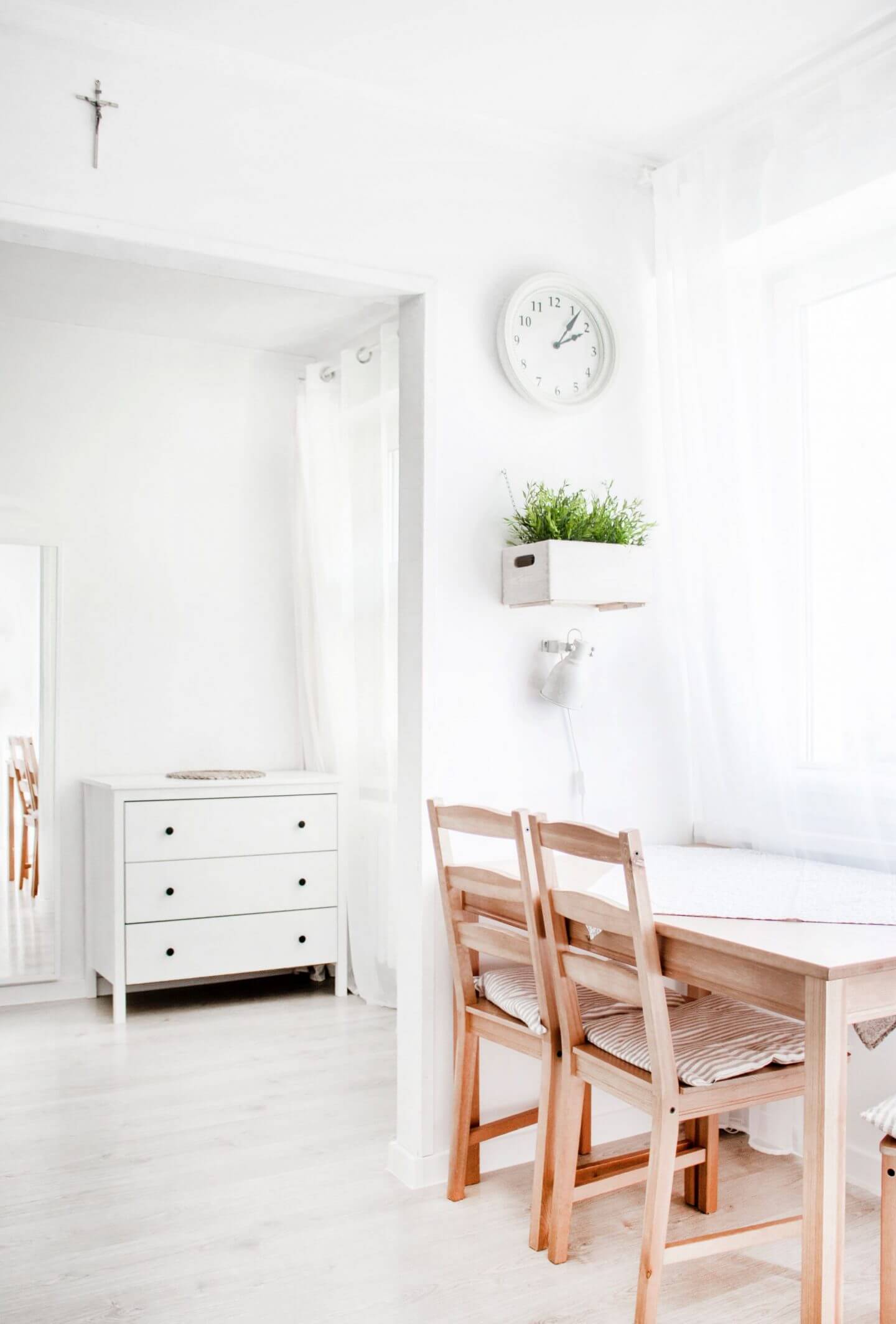
Don’t be afraid of blank walls or corners. They give the eye a place to rest and actually highlight the few things you do display. In design terms, this “negative space” is just as important as your chosen furniture and decor. It’s what creates that sense of calm openness.
5. Keep order with efficient organisation
Minimalism is based on a high level of order and organisation. This means you should aim to get rid of unnecessary items and keep only the essentials. Make sure that each item has a well-defined place and that the space is clean and untouched. Use clever storage solutions such as boxes or hidden cabinets to keep things organised and avoid clutter.
Organisation systems don’t have to be expensive. Simple drawer dividers, baskets, or under-bed storage can make a huge difference. Labelling containers and keeping similar items together also helps to stop mess from reappearing. Minimalism is about maintaining order long-term, not just creating a tidy space once.
6. Invite in the natural light
An important aspect in minimalist decor is natural lighting. Let as much natural light into the room as possible, avoiding heavy curtains and obstructions. Use light curtains or blinds to control the level of privacy and gently filter the light.
If your room doesn’t get much natural light, mirrors can be used strategically to bounce light around and create the illusion of brightness. Choosing lighter flooring and reflective surfaces like glass or metal accents can also enhance the effect.
7. Put emphasis on textures and quality materials
In a minimalist decor, textures and quality materials play an important role. Opt for natural materials such as wood, stone or metal. Add subtle textures by using natural fibre rugs, cotton cushions or linen curtains. These elements add depth and visual interest in a subtle way.
Because the style doesn’t rely on lots of colour or patterns, texture becomes the way to add character. A smooth leather chair against a wool rug or a polished stone countertop beside matte ceramic accessories can make the space feel layered without breaking the simplicity. Prioritising quality materials also means your pieces will last longer, which ties into the “less but better” philosophy of minimalism.
8. Choose minimal art and carefully selected decorative objects
In minimalist decor, art and decorative objects are important focal points. Choose minimalist artwork or photos with simple frames and avoid cluttering the walls with too many pieces, keeping a balance between negative space and exposed objects.

A single large piece of artwork often has more impact than lots of small frames. You can also use sculptural vases, statement lighting, or a few carefully chosen books as decor. The idea is not to ban accessories, but to be intentional with what you display. Everything should earn its place.
Minimalism in home decor provides a calm, elegant and functional atmosphere, so it’s no wonder so many people are drawn to this type of interior style.
By using things like a neutral colour palette and decluttering, you can easily achieve the minimalist look that you’re after.