

What are the benefits of a conservatory (and should you invest in one)?
Conservatories get a bit of an unfair reputation.
For years they’ve been lumped into the “nanna’s knitting room” category. They’re viewed as a bit dated, a bit chilly, a bit last century.
But actually, modern conservatories are having a real comeback. With better materials, improved roofing, and more design options, they’ve become one of the easiest ways to add light, space, and value to your home without remortgaging your soul.
Whether you’re after a peaceful garden-view reading spot, a bright home office, a dining room with atmosphere, or just a place to shove the kids when they’re going feral (I know I’ve been there), a conservatory can be a genuinely brilliant addition.
Here’s everything you need to know, including the benefits, the drawbacks, the design options, the costs, and all the handy bits people usually forget.
Why conservatories are back in style
Are conservatories outdated?
Short answer: nope.
What was outdated were the old-school, PVC-white, glass-roof boxes that roasted you alive in July and froze you solid come January. The kind your grandparents had. The kind you could hear rain battering from the next postcode.
But those aren’t the norm anymore. Modern conservatories are:
- Better insulated
- Better designed
- Better ventilated
- Actually usable all year round.
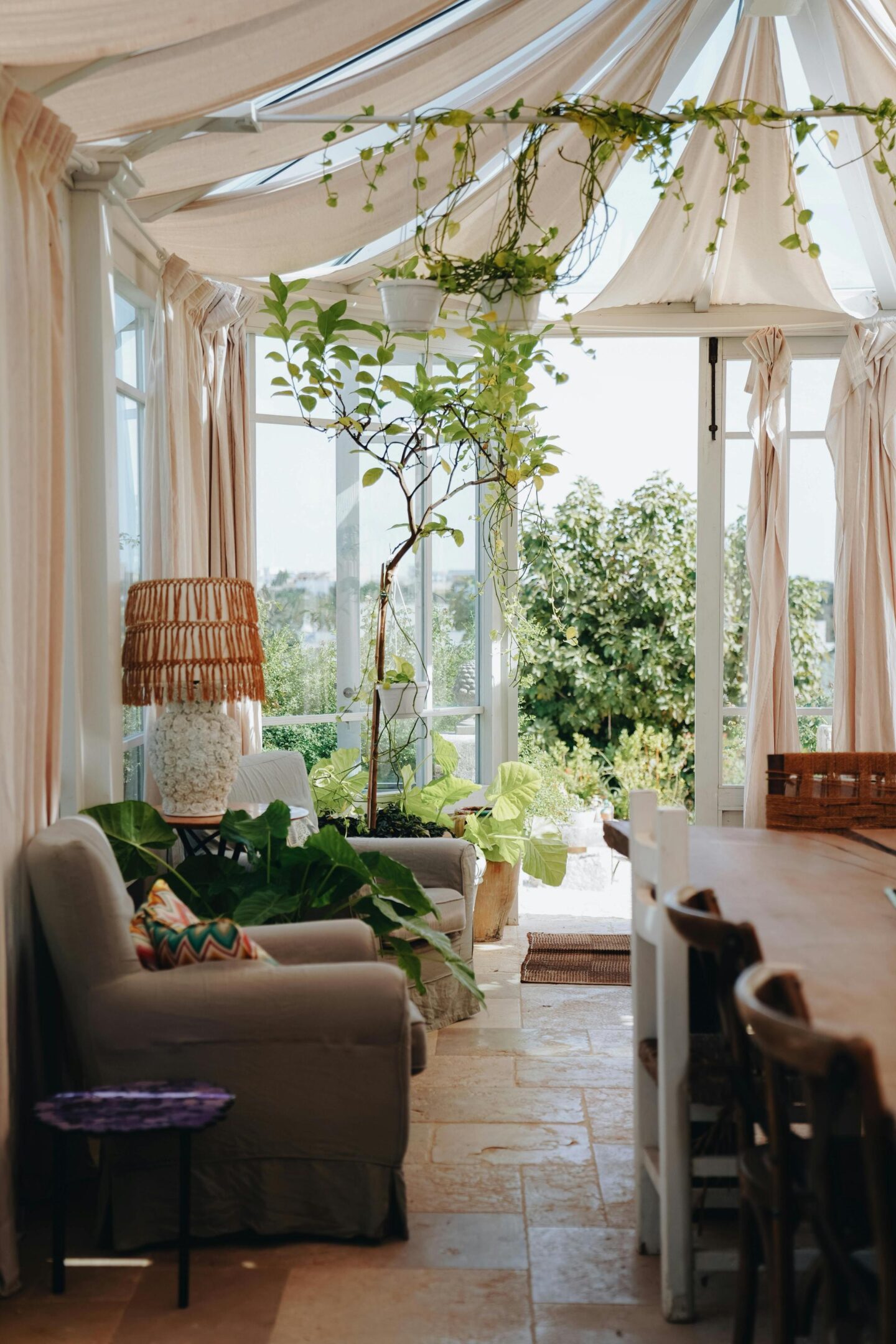
They’re closer to “garden rooms” now, architectural spaces that look like part of your home, not bolted on as an afterthought.
Why modern designs feel different
If you’ve only ever seen traditional conservatories, prepare to be pleasantly surprised. Today’s options include:
- Hybrid roofs mixing solid sections with glass
- Sleek aluminium frames
- Brick-built lower sections
- Big bifold doors opening onto the garden
- Cosy lighting, integrated heating, and even underfloor systems.

What are the benefits of a conservatory?
Below, you’ll find my top five benefits of investing in a conservatory, which may convince you it’s the right decision.
1. A bright, versatile extra room
You basically gain an entire new living space, one you can tailor to whatever you fancy.
Some popular ideas include:
- A grown-up lounge
- A playroom
- A home office
- A dining room
- A craft room / sewing space
- A reading nook
- A music room
- An indoor plant jungle
The beauty lies in how flexible the room is. It isn’t locked into being one thing forever and your conservatory can evolve with your lifestyle. Today a home office, tomorrow a toddler play area, next year a relaxing sunlit lounge.

2. A year-round space that connects home and garden
If you’ve ever wanted that “inside/outside” living vibe without freezing your toes off in February, a conservatory is spot on.
In summer, open all the doors and let the breeze in. In winter, you’ve got a cosy seat with a cracking view of the garden, creating a warm, peaceful retreat without needing to brave the cold.
That connection to nature does wonders for wellbeing too. More daylight, more greenery, more calm.
3. Adds value to your property
A well-designed conservatory can bump up your home’s market value by 5–10%, which is not to be sniffed at. Buyers love extra space and natural light, and a conservatory feels like a bonus room without the price tag of a full extension.
But in order for the conservatory to boost the value of your home, it must be well-insulated, properly integrated into the house, built with quality glazing and in keeping with the style of your home. Dodgy conservatories that stand out like a sore thumb will do nothing for your house value.
4. A cost-effective alternative to an extension
Extensions are brilliant, but wow… the price tag. A conservatory often comes in much cheaper while still giving you that coveted extra space.
Typical costs:
- Conservatory: £1,300–£1,500 per m²
- Extension: £1,800–£3,000+ per m²
And a conservatory usually goes up quicker too, often within a few weeks, especially when you use a company that has loads of experience like Origin Double Glazing.
For many homeowners, it’s the perfect middle ground between “I need more room” and “I don’t want to sell a kidney”.
5. Fills your home with natural light
This is the biggie.
A conservatory lets daylight flood through your home, especially if you’ve got a darker kitchen or living room. The extra brightness makes everything feel bigger, more open, more cheerful.
It can also mean you reduce the use of artificial lighting, which in turn lowers your energy bills.
What design options are there for conservatories?
Conservatories no longer need to be the plastic white boxes they once were. Now there are ways to make them look truly beautiful, and you can choose the roof material too.

Conservatory styles
There are more styles of conservatory than you might have first imagined. But before you panic, I’ll talk you through the most common ones and what they look like.
Lean-to conservatory
- What it is: Essentially a simple, single-sloped roof conservatory that “leans” against the main house wall.
- Best for: Small homes or modest gardens. It’s ideal if you want extra space without a fussy design.
- Why people love it: Quick to build, modern-looking, and maximises light without overpowering the home. It can also be a sleek option for a minimalist garden room or kitchen extension.
Victorian Conservatory
- What it is: The classic rounded or bay-style conservatory with a decorative, often ornate roof featuring multiple facets (usually 3–5 sides).
- Best for: Traditional homes, period properties, or anyone who wants a “classic” look.
- Why people love it: Loads of light from the angled glass panels and the slightly grand, charming aesthetic. It adds character and can feel like a proper statement piece.
Edwardian Conservatory
- What it is: Rectangular or square-shaped with a flat front — think “Victorian elegance but more modern simplicity.”
- Best for: Those who want a more practical interior space. The square design means more usable floor area than a Victorian conservatory.
- Why people love it: Perfect for dining rooms or offices because the shape makes furniture placement easier, and it still has that elegant, slightly traditional look.
Gable-front Conservatory
- What it is: A conservatory with a high, pitched roof at the front, forming a triangular “gable” shape.
- Best for: Homes where you want a dramatic visual impact. They suit larger properties and contemporary designs.
- Why people love it: Incredible light, a feeling of spaciousness, and that “wow” factor. It’s ideal if you want your conservatory to be a real showpiece.
P-shaped or T-shaped Conservatory
- What it is: A combination of two conservatory styles joined together to create a larger, more versatile space.
- Best for: Larger gardens or homes where you want multiple functional areas under one roof.
- Why people love it: It gives flexibility — you can have a dining area on one side and a lounge or office space on the other, all under one continuous roof. Great for entertaining!
Orangery
- What it is: Technically a conservatory hybrid with more brickwork, solid roofing, and often a central glass lantern.
- Best for: Homes that want the elegance of a conservatory but the sturdiness and insulation of a traditional extension.
- Why people love it: A luxurious, “grand” feel without losing natural light. It works beautifully for living rooms, kitchens, or multi-purpose spaces, and it integrates seamlessly with brick-built homes.
Each one gives a slightly different feel, so it’s worth thinking about how it’ll marry up with your existing house.
Roof choices
The roof you pick massively affects comfort. Options include glass, tiled and hybrid roofs, and the option you choose will probably depend on what you to plan to use the room for. Glass roofs let the sunlight in, which can make the conservatory very hot in the summer. But you could still choose a glass roof and plan to install some made-to-fit blinds or extra insulation on the inside to block the sun out while still letting light in.

If you’re worried about the classic “too hot / too cold” issue, a hybrid or tiled roof normally works wonders.
Popular materials
Different frame materials change both aesthetics and maintenance levels:
- uPVC: affordable, low maintenance
- Aluminium: sleek, modern, super durable
- Timber: beautiful and traditional (but needs more upkeep)
There’s genuinely something for every style and budget.
Energy efficiency and comfort
Let’s talk practicality, because nobody wants to build a beautiful space they can only use for two months of the year.
Modern glazing
High-performance glazing dramatically improves comfort. Look for low-E glass, argon-filled double glazing or solar-control coatings. These things can help to keep the heat in during winter and reflect excess heat in summer.
Heating options
To make it usable year-round, there are a number of heating options to think about for the winter. These include:
- Underfloor heating
- Electric heaters
- Extending your central heating (with proper regs)
- Thermal blinds
- A tiled roof for extra insulation.
Ventilation
Ventilation is absolutely key in summer so you should think about whether you want opening roof vents, trickle vents or large doors (bifolding or sliding) to get a breeze through in the warm months.
Solar gain
A well-designed conservatory can use the sun to warm the space naturally in winter, perfect for lowering energy bills.
Should I get a conservatory or add an extension?
This is such a great question, and one that gets asked a lot! A quick, handy comparison:
| Feature | Conservatory | Extension |
|---|---|---|
| Cost? | ££ | ££££ |
| Build time? | Fast | Slow |
| Natural light? | Excellent | Depends on design |
| Adds house value? | Yes | Yes, often more |
| Looks like part of house | Depends | Usually yes |
| Planning permission? | Rarely needed | Often needed |
When a conservatory is best
- You want more space quickly
- You’re on a lower budget
- You love natural light
- You want garden views.
When an extension is best
- You need it fully integrated with the house
- You need strict temperature control
- You want to build upwards later
- You want a kitchen or bathroom in the space.
If you want the best of both? A modern orangery is the perfect halfway point.
Planning permission and regulations
Planning permission
Most conservatories fall under permitted development, meaning no planning permission needed as long as you stay within limits around size, height, distance from boundaries and the percentage of your garden that has been built over.
If you’re unsure, it’s always worth checking with your local council.
Building regulations
Permissions might be required if:
- You’re installing a fixed heating system
- You’re opening up an entire exterior wall
- The conservatory isn’t thermally separated.
Your builder/contractor will be able to advise you on these points, as they’ll be used to understanding the regulations and what’s required.
Are there any downsides of a conservatory to consider?
Conservatories are brilliant, but not perfect so here is a list of some potential cons that you might want to consider before going ahead with a build (as well some potential fixes!).
1. Temperature issues
Cheap conservatories can swing from sauna to igloo, particularly those that have glass ceilings and walls and don’t have any insulation/blinds.
Potential fix: Invest in insulation, good glazing, and a proper roof. When you choose these things when the conservatory if first built, you’ll be able to get proper use out of your conservatory instead of it turning to the room no one wants to sit in.
2. Rain noise
Glass roofs can be loud and some people find that it’s difficult to relax, read or watch TV when the heavens open (which happens a lot in this country).
Potential fix: Hybrid or solid roofs soften sound so consider one of these instead of a glass roof when installing.
3. Mismatched design
A conservatory that doesn’t suit the house can look odd.
Potential fix: Match materials, colours, and proportions. If you have anthracite windows, install a conservatory with an anthracite frame.
4. Underuse
You should always think about how you will use your conservatory, particularly before it’s been installed. Then, when you’re designing the interior and thinking about what furniture to include, you’re doing so with purpose.
Without purpose, the room simply becomes a dumping ground.
Potential fix: Plan the room’s function before building and make additions as required. For example, if you know it will become a second TV room, plan for an aerial to be installed. If it will become a reading room, think about where your bookcases and seating will go.
5. Maintenance
Conservatories do require some maintenance to stay clean and functional. All that glass can get dirty, particularly the roof, so think about how and when you’ll clean the glass and the gutters.
Potential fix: Do a seasonal clean ahead of winter.
FAQs
Do conservatories add value?
Yes, usually 5 to 10% if well built.
Are conservatories warm in winter?
Modern ones are but old ones may not be. The roof and glazing matter the most.
Do you need planning permission?
Often no, but always double check.
How long does a conservatory last?
With quality materials (and when it’s well looked after), a conservatory can last at least 20 to 30 years.
What type of roof is best?
Glass is brightest whereas tiled is warmest and quietest. Hybrid can be ideal for a blend of the two.
How much does a conservatory cost?
Typically £10k to £25k depending on size, style, and spec.
Final thoughts
Far from being dated or gimmicky, conservatories are one of the smartest ways to expand your living space, boost natural light, and add value to your home, all without the cost or hassle of a full extension.
When planned well, they feel like a seamless, stylish part of your home, a place to relax, entertain, work, and breathe a bit of extra calm into everyday life.
And honestly? There’s nothing lovelier than hearing the soft patter of rain on the roof while you’re warm and cosy inside with a brew.


