

Tools you need if you’re doing a house renovation
For a lot of people, DIY isn’t a job which fills them with joy and satisfaction, but you can make DIY easier.
I’m not the biggest fan of DIY, but I do enjoy it more when I’m prepared. Is there anything worse than starting a job, and realising you don’t have the right paintbrush/screws/drill bits or you run out of sandpaper halfway through up-cycling a cupboard. There isn’t anything more frustrating. I’ve run out of paint before, and had to stop the job, and wait to buy more at the weekend.
DIY is usually done out of necessity (you don’t REALLY want to take all the doors off to sand them down because they’ve warped), but it isn’t always easy or quick.
To help you out, I have revealed some of the best tools out there to make your home renovation easier.
A voltage detector pen
These tools are very simple but very effective. I can’t even count the number of times me and Jay nearly touched a live wire that was hanging out the ceiling. When you put the end of the pen against the end of a wire, it flashes red to say that the wire is live, and you need to turn the electrics off. Saved us probably about 3/4 electric shocks. Well worth the money!
A drill
If there’s one tool that no renovation should be without, it’s a trusty drill. It’s easily one of the most versatile bits of kit you’ll own, and once you’ve got one, you’ll find yourself reaching for it constantly.
From putting up shelves to assembling furniture or even mixing paint and plaster with the right attachment, a drill really earns its keep.
Most modern drills also double up as screwdrivers, which means you can drive screws in neatly without destroying your wrists in the process. Cordless drills are the go-to these days, powered by rechargeable batteries that give you the freedom to move around without being tethered to a plug socket.
The beauty of a drill is its flexibility. Swap out the bit and you can go from drilling pilot holes in timber to driving screws into brickwork in a matter of seconds. Add in the fact that many come with adjustable torque settings, and you’ve got full control to prevent over-tightening or stripping screws.
Scrapers
Another simple tool that has LOADS of uses. Not only was it good for stripping wallpaper, but also for smoothing caulk into crevices, for mixing cement/paint in buckets and even for removing ridges in the windowsills before painting them.
I’d buy a load in different sizes for all kinds of jobs.
A mitre saw
When it comes to cutting wood with absolute precision, a mitre saw is the tool you’ll want by your side.
Unlike a standard hand saw (which is slow and often a bit wobbly), a mitre saw lets you make clean, accurate cuts in seconds. Perfect for skirting boards, door frames, picture rails, or any job where you need neat angles and a professional finish.
A mitre saw works by pulling down a circular blade onto the material, which is held steady against a base.
The clever bit is that the saw can be set to cut at different angles, so whether you need a straight cut, a 45-degree corner, or something more unusual, you can adjust it and know it’ll be spot on. Some models even slide forward and back, which means you can cut wider pieces of timber without any hassle.
The main selling point is accuracy. You’ll get crisp, repeatable cuts without the guesswork, which is a lifesaver when you’re trying to line up trims or build furniture that actually fits together. It’s also much quicker than doing everything by hand, saving you a lot of time (and frustration).
Yes, they take up a bit of space and can look intimidating at first, but once you’ve used a mitre saw, you’ll wonder how you ever managed without it. For anyone tackling a renovation, it’s one of those tools that takes your work from “DIY attempt” to “that looks like it was done by a pro.”
nbsp;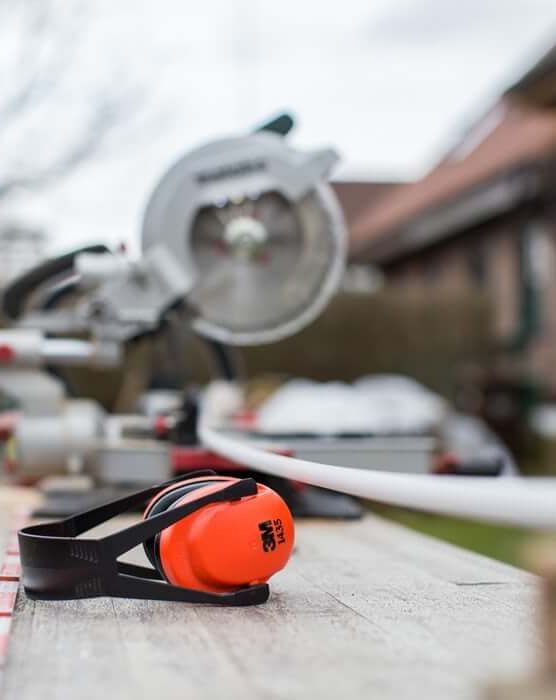
A lathe
This isn’t a standard tool that you’d find around any house, but it can be really handy for certain aspects of renovations. You could make all sorts of home accessories, including door handles, wooden bowls, or rolling pins.
Jay’s wanted a lathe for SO long but I think he would just mess about with it rather than making anything particularly beautiful.
You should have experience before using one as they’re tricky pieces of machinery, and dangerous without the right know how. Jay’s a mechanical engineer and has been trained correctly in how to use one. In using a lathe safely, you can create excellent pieces of art and items for your home.
A laser measurer
Gone are the days of wrestling with an old tape measure that never quite stays straight.
A laser measurer is one of those modern renovation tools that makes you wonder how you ever managed without it. Instead of stretching a metal tape across a room and hoping you’ve got the right angle, a laser measurer fires out a precise beam of light and calculates the distance almost instantly.
The device does all the maths for you, giving you an accurate measurement in seconds, often down to the millimetre. Some models can even calculate area and volume automatically, which is brilliant if you’re planning flooring, working out paint coverage, or checking how much plasterboard you’ll need.
The beauty of a laser measurer is in its speed and accuracy. You can measure large spaces on your own (no more asking someone to hold the other end of the tape), and they’re particularly handy in awkward or high areas where a traditional tape measure just won’t cut it.
Plus, they’re compact, easy to carry around, and many have memory functions so you don’t need to scribble down every number straight away.
A nail gun
If there’s one tool that can speed up a renovation job like nothing else, it’s a nail gun.
Forget the slow, arm-aching days of hammering in nails one by one. With a nail gun, you simply pull the trigger and bang, the nail is driven home in a split second. It’s quick, precise, and makes even big jobs feel much less daunting.
Nail guns work by using either compressed air, gas, or battery power to fire nails into wood or other materials at high speed. The result is a firm, professional-looking finish without all the faffing about. They come in different types too – framing nailers for big structural jobs, brad nailers for trim and finishing work, and flooring nailers that make laying down boards a breeze.
Once you’ve got the hang of them, they’ll feel like a must-have. For jobs like fitting skirting boards, building furniture, or even framing up new walls, a nail gun can turn what might have been a slog into something almost satisfying.
In some cases, these tools could help you avoid house renovation disasters. They’re well worth the investment, especially if you’re doing the work yourself rather than hiring tradesmen.
What would you say are the tools you need if you’re doing a house renovation? Are there any you think I should add to the list? Let me know in the comments!





Great advice! Thanks for sharing this valuable advice. I found it very helpful for me. Thanks for sharing.
I appreciate you for giving these key factors to take into account while selecting the best tools and equipment for home renovation. It is really helpful for me.